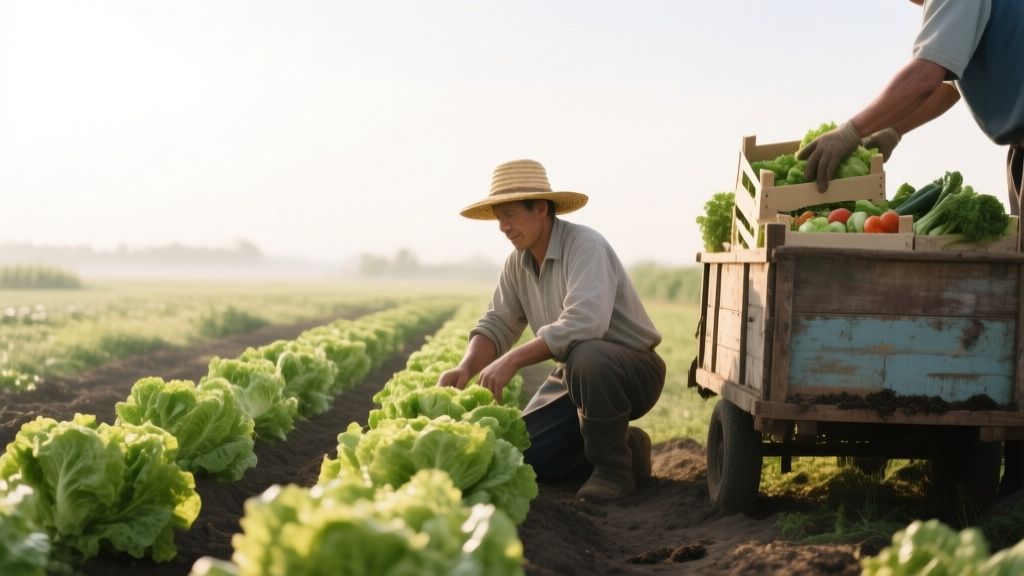

About This Article
The organic supply chain in agriculture moves certified food from farm to table while keeping it free from synthetic chemicals. Learn more below.
Introduction
The organic supply chain in agriculture is the route that certified organic food takes from the farm through processing, storage, and delivery to your grocery store or table. It means every step, from soil to seed to harvest to your kitchen, must meet strict rules about what chemicals can and cannot be used. For example, because consumers want to know their food is truly organic, this supply chain exists to prove it.
Food today travels through many hands before reaching you. A tomato might grow on one farm, get washed and packed at a facility miles away, travel by truck, rest in a warehouse, and finally sit on a store shelf. Each stop is a chance for the organic status to slip away or get mixed up with conventional produce. The organic supply chain keeps this from happening by using separate equipment, careful labeling, and regular inspections.
Table of Contents
Core Definition and Structure
An organic supply chain is a system designed to keep organic produce separate from non-organic food at every stage. It starts with certified farms that follow rules about pesticides, fertilizers, and animal treatment. For example, the structure protects the product’s organic status through labeling, storage, and transport.
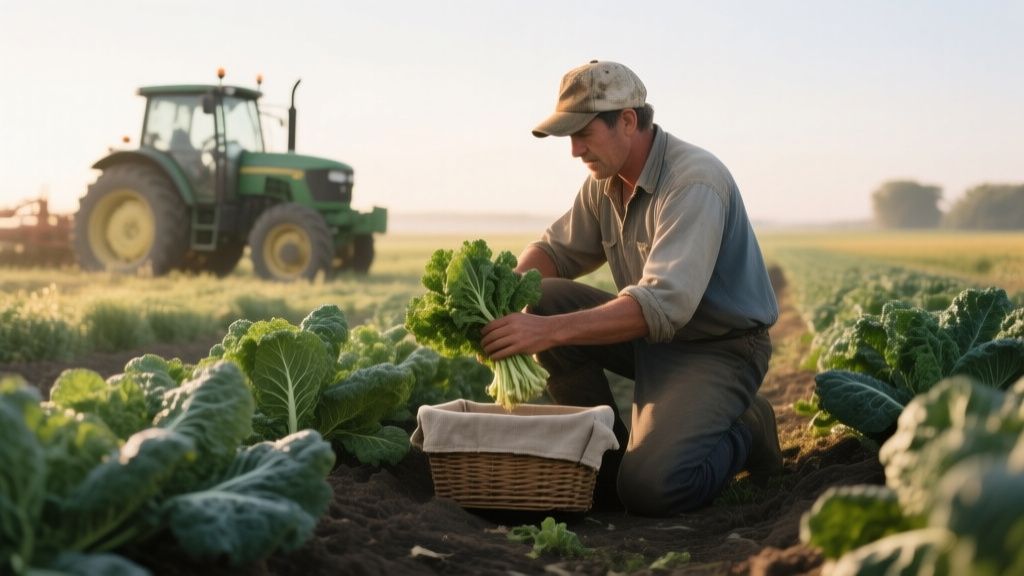
Certification bodies check farms, processors, and distributors to ensure they follow the rules. For example, these inspectors visit sites yearly and review records. Without this oversight, calling something organic would be just a claim with no proof behind it. The organic supply chain in agriculture depends on this verification at every step.
How Certification Works
A farm applies for organic status and must wait a few years for the soil to clear of banned chemicals. During this time, the farmer follows all the rules but cannot call the produce organic yet. Then, once approved, the farm gets a certificate that must be renewed yearly.
Processors who handle organic food must also be certified. For example, this means they cannot use the same machinery for organic and non-organic products without thorough cleaning first. Each facility has separate storage areas and careful record-keeping to prove nothing was mixed.
Why It Matters for Consumers
Consumers choose organic food because they want to avoid synthetic pesticides and fertilizers. For example, when you buy something labeled organic, you’re trusting that the system kept it clean all the way from soil to store. That trust only works if the supply chain is real and enforced.
Health and Environmental Benefits
Organic farming does not use synthetic pesticides, so the soil stays healthier longer and birds and insects face fewer toxins. Consumers who eat organic food may reduce their exposure to certain chemicals, though any real health benefit depends on many factors. The organic supply chain in agriculture proves these practices were actually followed, not just promised.
When farms commit to organic methods and stay certified, the land itself improves over time. Soil holds more water and life. For example, local ecosystems become more stable. These benefits spread beyond one farm because water and wildlife do not respect property lines.
Steps from Production to Purchase
The journey starts at the farm where soil gets tested and crops are grown without banned inputs. Harvest then happens on a planned date with clean tools and containers. Workers who touch the produce wear clean gloves and clothing to prevent contamination. The organic supply chain in agriculture begins here with these careful steps.
Movement Through Distribution
Organic produce then travels to distribution centers where it stays in a separate area from conventional food. Temperature and humidity are managed to keep it fresh. For example, labels and tags track where each box came from and where it goes next.
Real-World Examples
Farmers’ markets show how the supply chain works at its simplest level. A farmer grows organic produce, brings it directly to a weekend market, and sells it to you. No middleman, no processing facility, no long storage means less chance for contamination or mixing. However, most organic food travels further than a farmers’ market. For a closer look at this, see organ supply industries.
Tracking Through Documentation
Every box that arrives at a store has paperwork showing its path from farm to retailer. Labels include the farm’s name, the date harvested, the certification agency, and the distributor’s name. For example, store staff and customers can trace the product back if needed.
Some organic brands now use QR codes that shoppers can scan to see the farm’s location and practices. For example, this transparency builds trust and lets consumers understand what they are buying. The supply chain, in this case, becomes visible and personal.
These examples show that organic is not mysterious or hidden, it is documented and tracked at every stage.
Common Mistakes to Avoid
One error happens when farms or facilities mix organic and non-organic products by accident. For example, this can occur if cleaning schedules slip or new staff are not trained well. A single unlabeled tool or a truck not properly washed can undo months of careful work.
Record Keeping Problems
Poor documentation is a third major issue. Farms and processors must keep detailed records of what was bought, used, and sold. The organic supply chain in agriculture fails when records are incomplete or sloppy because inspectors cannot verify the product’s status, and the certification can be suspended.
To avoid these mistakes, buy from stores and farmers you know. For example, look for the certification logo on packages. Ask questions at farmers’ markets about how the farm grows its food. When you understand the supply chain, you can spot problems before you purchase.
Practical Tips for Readers
Start by learning what the certification symbol looks like in your country. In the United States, it’s a green and white USDA Organic seal. For example, in Europe, it’s often a green leaf with stars. These marks mean an independent agency has checked the farm or processor.
When shopping, read the label carefully. It should say “certified organic” and name the certifying body. The organic supply chain in agriculture fails to deliver its promise if it only says “organic” with no certification mark or agency name, so treat it with caution. At farmers’ markets, ask the farmer directly how they grow food and whether they are certified.
Making Informed Choices
Understand that certified organic is not the same as local or sustainable, though it can be all three. For example, organic means no synthetic chemicals; local means grown nearby; sustainable means practices that work long-term. All three are valuable, but they address different concerns.
Current Trends and Challenges
Demand for organic food has risen sharply over the past decade. More farms are converting to organic methods, but the process takes years. Because certifies are stretched thin with inspections, that can slow approvals and add costs to producers.
Technology and Transparency
Blockchain and digital tracking are starting to reshape how the supply chain works. These tools create a permanent, shared record of a product’s journey that cannot be faked or erased. For example, consumers may soon see real-time data about where their food comes from and what has happened to it at each step.
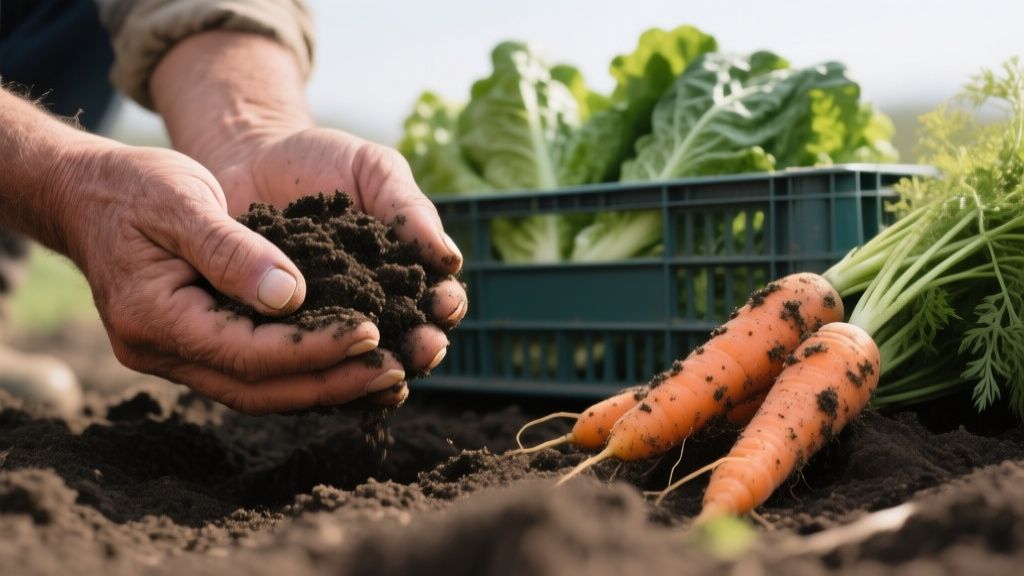
Comparison Table
Different approaches to food production each have strengths and limits. For example, the table below shows how organic compares to other systems you might encounter when shopping.
Each option serves different needs, and many people mix them when they shop. For example, the key is knowing what each label means and choosing based on your priorities.
Frequently Asked Questions About the organic supply chain in agriculture
What does organic certification actually mean?
It means an independent third party has inspected a farm or facility and confirmed it follows strict rules about which chemicals can be used. The certification is renewed yearly, and surprise inspections can happen to verify ongoing compliance. For example, without this verification, the word “organic” on a label has no legal weight.
Can organic and non-organic food be stored in the same warehouse?
Yes, but only if they are in separate areas with clear physical barriers and different equipment. For example, the same truck, crate, or conveyor belt cannot be used for both types without thorough cleaning in between. If mixing happens, the organic status is lost and the product must be relabeled or discarded.
Why does organic food sometimes cost more?
Organic certification, farming methods, and supply chain separation all add cost. Conventional farms can use cheaper synthetic inputs, while organic farms rely on compost and mechanical methods that take more labor. Because keeping it separate requires different facilities and careful documentation, those practices drive up expenses.
How can I trust that food labeled organic is really organic?
Look for the certification mark and the name of the certifying agency on the package. For example, these marks mean an inspector has visited and verified the product’s history. You can also ask the retailer or farmer for documentation, and many now provide traceability through apps or websites.
Do organic farms use any pesticides at all?
Organic farms can use certain approved pesticides and fungicides, but only those from natural sources or minerals, not synthetic chemicals. For example, examples include copper, sulfur, and neem oil. These inputs are still subject to rules about how much can be used and how often.
Conclusion
The organic supply chain in agriculture is a system built on separation, documentation, and verification. It allows food to be grown, processed, and sold with confidence that rules were followed and chemicals were kept out. Because without this structure, the word organic would mean nothing.
If you care about what you eat and where it comes from, understanding this supply chain helps you make better choices. For example, look for the certification mark, ask questions at markets, and support farms that commit to these practices. Your choices drive demand, which encourages more farmers to go organic and more innovation in keeping food truly clean.
Expert Insight
Organizations working in organic certification advise that transparency and organ supply industries require accurate record-keeping at every stage because documentation is the proof that organic standards were actually met. When records are clear and third-party verified, consumers and regulators can trust that the food is what the label claims it is.



Pingback: How To Start A Morning Routine That Sticks?