
About This Article
Learn what vertical and indoor farming are, how they work, which crops suit them, and whether the costs fit your goals.
Introduction
Vertical and indoor farming grows produce indoors on stacked shelves. Weather and seasons do not affect the crops. The system uses controlled light, water and nutrients.
This guide explains how vertical and indoor farming systems work. It shows three real-world cases. It points out common mistakes. It walks you through the practical choices you face before investing.
Key Takeaways
- Vertical and indoor farming grows food indoors on stacked shelves using controlled environments year-round.
- Water use can drop by up to 90 percent compared to traditional farming methods.
- Productivity varies greatly by crop species; leafy greens and herbs suit vertical farms best.
- Startup costs for equipment, lighting, and cooling are high and can be prohibitive.
Table of Contents
What Vertical and Indoor Farming Means
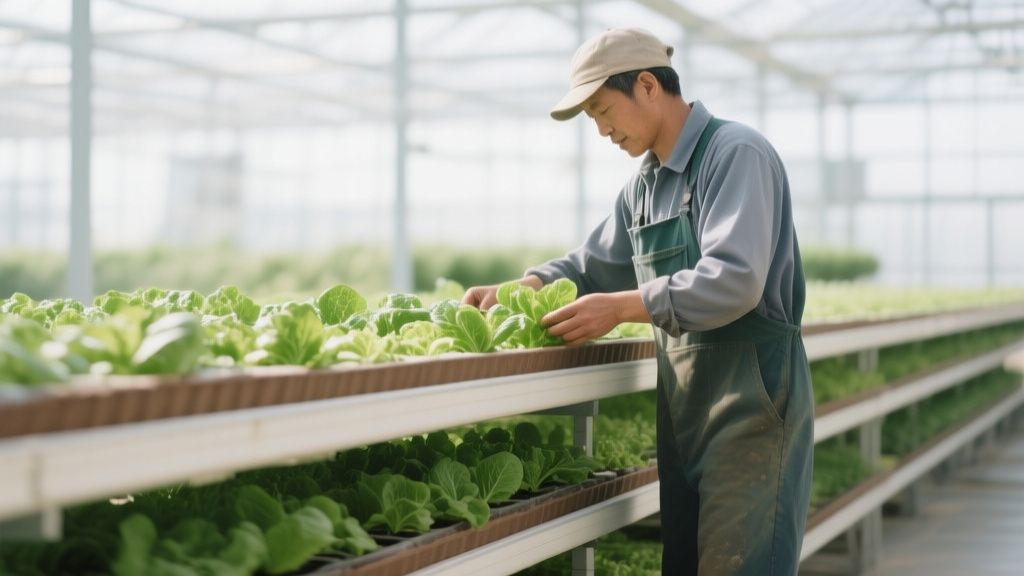
Vertical and indoor farming grows produce indoors on stacked shelves. It uses limited land, chemicals and water. The practice uses controlled environment agriculture. This method applies plant science and environmental control to optimize plant growth. It suits lettuce, spinach, herbs, microgreens and other crops. These crops thrive under artificial light and do not need deep root space.
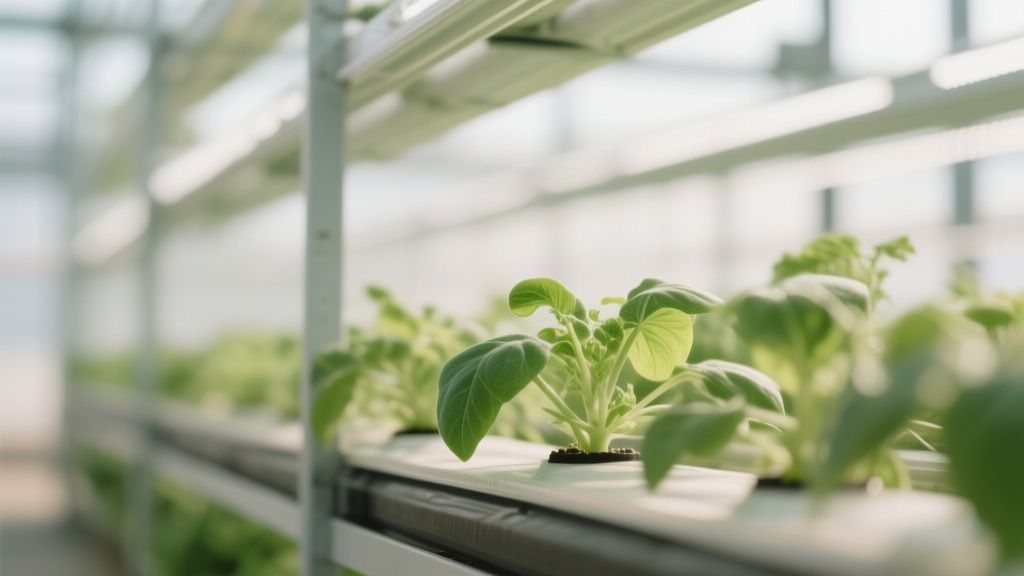
Two main systems deliver nutrients: hydroponic and aeroponic. According to Frontiers in Plant Science (NCBI and NIH) (2025), controlled environment agriculture uses these systems. It delivers nutrients with precision. Hydroponics grows roots in water mixed with nutrients. Aeroponics mists roots with nutrient solution in air. Both replace soil. They let growers adjust every variable. Light, temperature, humidity and nutrient strength can all match what each crop needs.
Who Uses Vertical and Indoor Farming
Urban restaurants use vertical farms. Grocery retailers use them. Universities and research institutions use them too. They cut food miles. They grow food year-round near customers. Some startups have built large commercial facilities. Others operate small rooftop or basement farms. Home growers also experiment with compact, low-cost systems. These systems help supplement their diet.
Why Vertical and Indoor Farming Matters
Vertical and indoor farming can produce food year-round. Growers can harvest every season. Frost, drought or pest damage do not disrupt supply. According to Technical University of Munich (TUM) (2024), water consumption in closed vertical farming systems could be reduced by up to 90 percent. This matters in regions facing water scarcity. It matters in cities where every drop counts.
Video: Are indoor vertical farms the future of agriculture? | Stuart Oda
The Limits of Vertical and Indoor Farming
Productivity does not stay the same across all crops. According to Frontiers in Plant Science (NCBI and NIH) (2025), analysis of 171 publications with 1403 data points showed major productivity variation. Variation exists among crop species in vertical farming. Leafy greens and herbs excel. Fruiting crops like tomatoes and peppers often need more light. They need more space. The system cannot efficiently provide these things.
How Vertical and Indoor Farming Works
A vertical farm stacks growing beds on top of each other. It often sits in a closed room, warehouse or shipping container. LED lights replace sunlight. A climate control system manages temperature and humidity. Nutrient solution flows through the beds on a timer. The goal is to create stable conditions. These conditions are optimized for plant growth. Plants grow faster and more uniformly than they would outdoors.
According to Frontiers in Plant Science (NCBI and NIH) (2025), Analysis of 171 publications with 1403 data points showed major productivity variation among crop species in vertical farming.
- Set up the controlled environment. Choose a building with power, water and drainage. Insulate walls and seal doors to hold temperature and humidity steady. Install LED lights on timers, an air circulation fan, and a humidity or temperature sensor tied to a thermostat or smart controller.
- Choose crops suited to vertical growing. Start with leafy greens, lettuce, spinach or herbs. These crops mature in 20 to 40 days, tolerate close stacking, and have a ready market. Avoid deep-rooted or long-season crops unless you have extra space and light.
- Install growing systems. Set up hydroponic troughs, NFT (nutrient film technique) channels, or aeroponic misters. Connect them to a reservoir and pump. Test the system without plants first to find and fix leaks and flow problems.
- Adjust these daily based on plant growth stage and sensor readings.
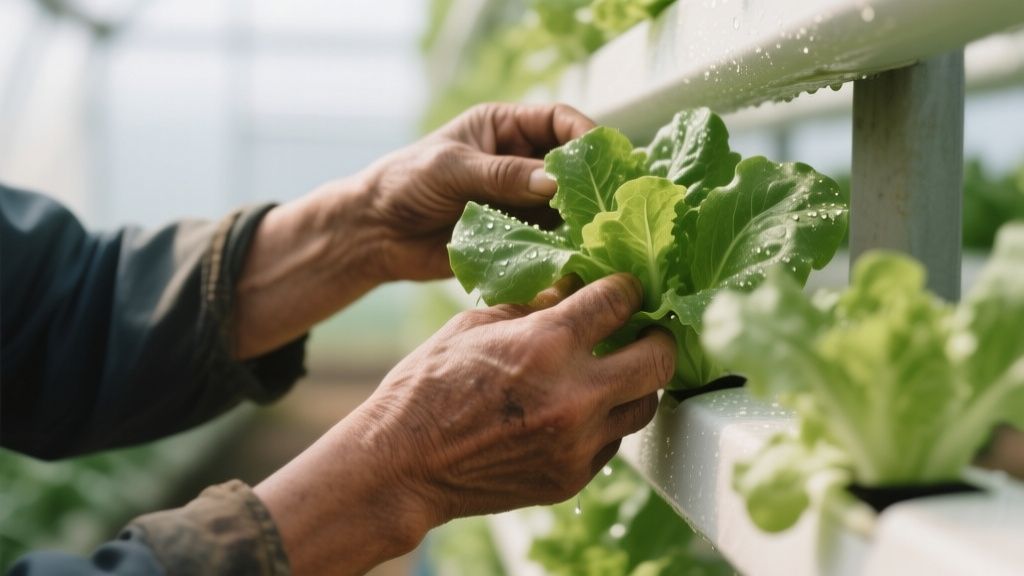
- Harvest and cycle crops. Cut mature plants at the base. Clean and disinfect troughs and tools before the next crop. Plan a staggered planting schedule so you harvest every week and have steady output.
What to Expect from Vertical Farming
Expect fast growth. Leafy greens can reach harvest size in three to four weeks instead of six to eight weeks outdoors. Yields per square foot are 15 to 25 times higher than field farming. Light and nutrients are unlimited and predictable.
Worked Examples
Suppose you operate a small urban restaurant in a cold climate. You want to grow lettuce, basil and spinach year-round for your menu. You could install a 300-square-foot hydroponic farm in a basement. You could use an unused storage room instead. After three months, you harvest 10 to 15 pounds per week of fresh greens. The cost is below what wholesale suppliers charge you. By month 12, the system pays for itself. You can sell excess harvest to other restaurants nearby.
The greenhouse costs less per square foot. It can only grow during the season. It must ship produce 400 miles to market. The vertical farm costs twice as much. It grows year-round and sits three miles from restaurants and grocery stores. It can charge premium prices for ultra-fresh local produce. After two years, the vertical farm reaches profitability. The greenhouse struggles because competition from distant mega-farms keeps prices low.
Common Mistakes to Avoid
Picking crops with low vertical farming yields. Some growers assume any crop can succeed indoors. They believe enough light and nutrients will work. The reality is different. Root crops, squash, watermelons and tree fruits grow too large or take too long. Profit margins do not justify the energy cost. Solution: start with lettuce, spinach, basil or microgreens. Once your system runs smoothly, experiment with higher-value herbs and specialty greens. Understand your costs first.
Ignoring research data gaps. The vertical farming industry lacks current and public research data. Data on long-term profitability is rare. Data on pest management is rare. Data on crop genetics for indoor growing is rare. Many farms operate on trial and error. Published guides do not cover their specific setup. Solution: join networks such as university research projects and industry consortiums. Share data with other growers. Expect a learning curve of 12 to 24 months before your farm runs at peak efficiency.
Practical Tips for Readers
- Start small and measure everything.
- A 50-square-foot test bed costs $3,000 to $5,000 and teaches you the real cost per pound of produce before you commit to a full-scale farm.
- Track every expense: seeds, electricity, water, nutrients, labor and equipment repairs.
- Many growers discover that their first year costs 2 to 3 times their initial estimate because of hidden maintenance and waste.
- Adjust your crop choice based on your market and climate.
- Indoor farming significantly enhances land, water and nutrient use efficiency, so it makes sense in dense cities or water-scarce regions.
- In rural areas with cheap land and abundant water, traditional farming may still be more profitable.
- Consider what your customers will pay for your product.
- If you are growing lettuce 10 miles from a customer, you can charge 20 to 30 percent more than a distant field farm. This margin is essential to cover your high energy costs.
- Monitor your performance metrics monthly.
- Calculate pounds per square foot per month, electricity cost per pound, water use per pound, and gross profit per pound.
- Compare these to your projections and to published benchmarks (when you can find them).
- Universities including Arizona, Michigan State, Purdue and Ohio State are studying the viability and efficiency of vertically farming leafy greens, and some are starting to publish open-source data.
- Watch for these reports and adjust your methods as evidence emerges.
Limits and Challenges
Startup capital and operating costs for vertical and indoor farming can be very high. Lighting and air conditioning systems cost a lot. Banks are cautious about lending to farms without a track record. Many operators must pay out of pocket. Others find investors willing to wait years for returns.
According to Technical University of Munich (TUM) (2024), Water consumption in closed vertical farming systems could be reduced by up to 90 percent.
The vertical farming industry lacks up-to-date and publicly available research data, so growers often struggle to find best practices and benchmarks for their own operations. Universities are working to close this gap. This means your farm will be partly an experiment. Expect to troubleshoot problems that published manuals do not address. Learn from other growers’ mistakes as well as your own.
Comparison Table
Four main approaches to growing food vary in startup cost, energy use, yield and best use case.
Choose based on your location and budget. Consider your crop type and target market. High-value crops and dense urban areas favor vertical methods. Abundant land and mild weather favor traditional or greenhouse methods.
Frequently Asked Questions
What is vertical and indoor farming?
Vertical and indoor farming grows produce indoors. Plants sit on stacked shelves. The system uses controlled light, temperature, humidity and nutrients. Plants grow in hydroponic or aeroponic systems without soil. They grow independent of outdoor weather. The method produces leafy greens and herbs year-round. It uses a small footprint. It works well in cities or regions with limited arable land.
Do vertical farms make money?
Some do, but many struggle. It depends on your crop choice, local market price, energy costs and how efficiently you run your farm. Startup capital and operating expenses for vertical farming can be prohibitive, particularly for lighting and air conditioning systems. Farms growing high-value herbs and microgreens in cities with premium markets have reported profitability after 18 to 36 months. Farms in regions with cheap electricity and steady demand for leafy greens reach breakeven faster than those in regions with expensive power.
How much water does vertical farming save?
Water savings are dramatic. According to Technical University of Munich (TUM) (2024), water consumption in closed vertical farming systems could be reduced by up to 90 percent. This compares to open-field irrigation. Water circulates in a closed loop. It gets reused many times. Little evaporates or runs off. For regions facing drought or water restrictions, this is a major advantage.
Which crops grow best in vertical farms?
Leafy greens excel: lettuce, spinach, kale, arugula and chard. They mature in three to four weeks. They tolerate close spacing. Herbs such as basil, cilantro and parsley thrive under LED lights. Microgreens and sprouts also succeed. According to Technical University of Munich (TUM) (2024), vertical farming systems can boost productivity for crops, algae, mushrooms, fish, insects, and cultured meat. The range is widening. Fruiting crops like tomatoes and peppers require more light. They require more vertical space. This makes them less cost-effective in most current systems.
Why is there a research data gap in vertical farming?
The vertical farming industry is young and fragmented. Few farms share their operating costs openly. Few share their yields or failures. Universities are only now running large studies. This gap hurts growers. They must solve problems through trial and error. They rarely read published best practices. Sharing data between farms helps close this gap. Supporting university research also helps. This improves profitability and sustainability.
Conclusion
Vertical and indoor farming can produce food year-round in cities and water-scarce regions. It uses far less water and land than traditional farming. The technology works best for leafy greens and herbs. These crops mature fast and command a premium price when grown locally.
Yet high startup costs, energy bills and gaps in public research data mean this method does not suit every grower or every crop. Before investing, run a small test bed. Measure your true costs. Check whether your local market will pay enough to cover them. If you grow premium greens in a city center, the margins can work. If you are competing with distant mega-farms on commodity greens, traditional farming will likely stay cheaper for now.
Key Takeaway
Vertical and indoor farming works best when you grow high-value crops like leafy greens or herbs in an urban area where customers pay a premium for ultra-fresh local food and your electricity is affordable.
Sources
- Indoor Vertical Farming, Technical University of Munich (TUM) (2024)
- Researchers to Study Viability of Vertically Farming Leafy Greens, University of Arizona
- Vertical Farming, USDA Agricultural Research Service (2018)
- Room for Growth: Princeton’s Vertical Farming Project harvests knowledge for a budding industry, Princeton University High Meadows Environmental Institute
- Editorial: Plant biology for indoor vertical farming: a multi-discipline approach to controlled, Frontiers in Plant Science (NCBI and NIH) (2025)
- NASA Research Launches a New Generation of Indoor Farming, NASA (2024)
About The Author

noor mirza
How this was written: It was researched from the public sources named and linked in the text, each figure shows the year of its source, and it was checked by software for broken links, repeated or contradicting statements and cut-off sentences before publishing. It is general information.
Last reviewed:
For corrections, please contact the editorial team.