

About This Article
This guide explains organic vs. conventional farming so you can compare soil health, pest control, yields, costs and environmental impact.
Introduction
Organic vs. conventional farming describes two distinct systems. They differ in how they manage soil, pests, crops and inputs. The core difference is whether farmers rely on natural biological cycles. Or do they rely on purchased synthetic materials to maintain fertility and control pests? This matters because your food choices, farm investment and land management depend on understanding what each system does and costs.
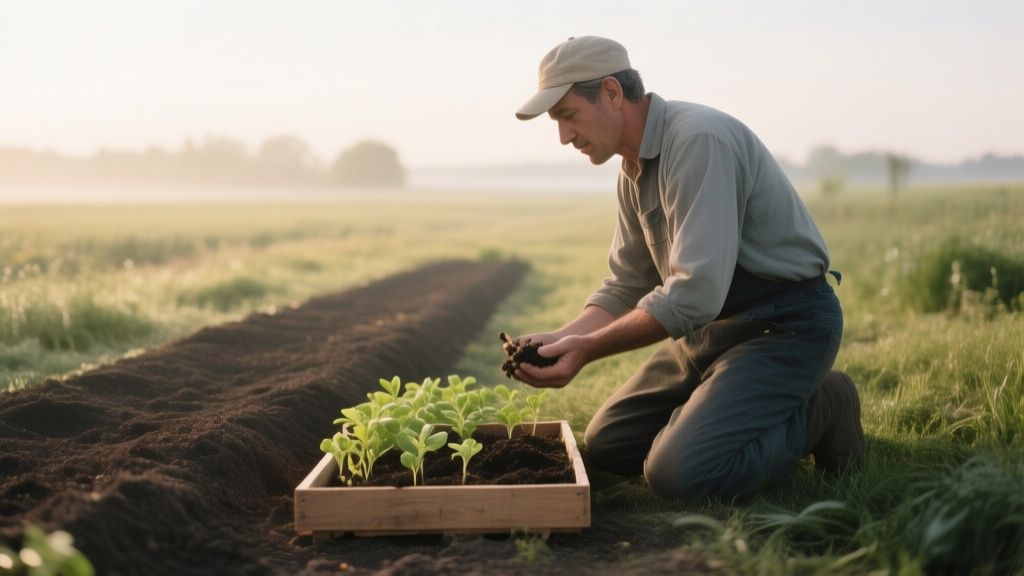
You will learn what each system is, why the differences matter, how each one works, and which fits your situation.
Key Takeaways
- Organic farming uses natural processes; conventional farming uses synthetic inputs.
- Organic certification needs accredited inspection and ongoing annual costs.
- Both systems can be sustainable with proper management.
Table of Contents
Key Differences Between Organic and Conventional Farming
Organic vs. conventional farming rests on one foundational split. How do farmers build soil fertility and manage pests? According to Atlantica Agricola (2026), organic farming is governed by specific regulations. These define which practices and inputs are permitted. Conventional farming allows a broader range of tools and technologies. This regulatory difference shapes every choice a farmer makes on the land.
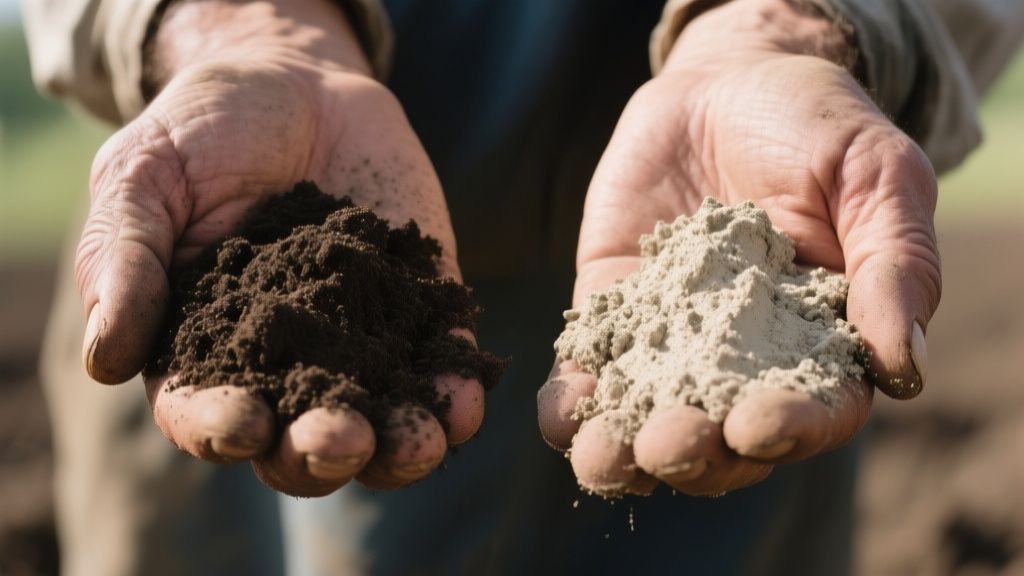
Soil health and microbial life stand out as central. Research from the National Institutes of Health (NCBI and PMC) reveals that the two systems shape soil ecosystems in distinct ways. They influence microbial diversity and composition. Organic soil tends to hold more microbial variety. Conventional soil may rely more on chemical inputs to maintain productivity.
Fertility and Pest Management Approaches
According to Farmers Advisory (2025), the core difference is whether fertility and pest management use biological cycling or purchased inputs. Organic farmers use crop rotation, compost, animal manure and cover crops. These restore soil naturally. Conventional farmers apply synthetic fertilizers, herbicides and pesticides. These boost yields and control weeds and insects quickly.
Why These Differences Matter
Yield and productivity differ meaningfully between the two systems. According to Frontiers in Agronomy (2025), German farms showed a 40% yield difference. This was between organic and conventional farming across all crops in 2025.
Environmental and Health Considerations
Studies from Frontiers in Agronomy on long-term lysimeter research show nitrogen management differs sharply between systems. This affects water quality and soil nutrient cycling. Organic farms had lower nitrogen losses in some scenarios. Conventional farms sometimes show better nutrient retention. This depends on soil type and rainfall.
Video: Organic Farming vs Conventional Farming – the benefits and differences of farming organically
How Each System Works
Both systems follow a cycle. Prepare soil, plant crops, manage pests and weeds. Harvest and prepare the land for the next season. The methods differ in every step. Organic farming emphasizes building natural fertility and biodiversity. Conventional farming maximizes yields with purchased inputs and technology. Here is how each system progresses through a growing season.
- Assess your soil management approach. Organic farmers test soil, build compost piles and plan rotations a season ahead. Conventional farmers test soil and select synthetic fertilizer rates based on yield targets.
- Compare your input types. Organic farmers source approved compost, cover crop seeds and allowed biological pest controls. Conventional farmers purchase synthetic fertilizers, herbicides and pesticides from suppliers.
- Monitor your crop rotation strategy. Research shows organic rotations run 15% longer than conventional ones, cycling through more diverse crops to break pest cycles and restore nitrogen. Conventional farms often plant the same crop repeatedly with chemical pest control.
- Track your yields and costs. Organic farms record lower total output but may achieve higher per-unit market prices. Conventional farms report higher total yields and lower per-unit production costs.
Timing and Seasonal Tasks
Organic cycles take longer because natural processes move slowly. Chemical applications work faster. Compost breaks down over 3 to 6 months. Cover crops grow for a season before turning into the soil. Conventional cycles move faster. A synthetic fertilizer works in days. A herbicide kills weeds in a week. Both systems deliver crops within a harvest season. Organic systems demand more advance planning.
Worked Examples
For example, suppose you own a 50-acre wheat and clover field. Under conventional management, you would plant wheat each year. Apply synthetic nitrogen in spring. Spray herbicide in early summer to kill weeds. Harvest in late summer. Total cost runs high for chemicals but low for labor. Yield is steady at 60 bushels per acre. You earn profit through volume on the commodity market.
Consider this case: a 10-acre vegetable farm near a city. Conventional management uses drip irrigation and synthetic fertilizer applied weekly. Broad-spectrum insecticide is sprayed every 10 days. Yields are high, water use is efficient, and crops reach market quickly. According to Atlantica Agricola (2026), organic farming needs careful planning and technical expertise. It requires continuous crop monitoring and access to authorized inputs. The organic version of the same farm uses drip irrigation and compost applied at planting. Hand-scouted pests are treated with approved organic soap. Diverse plantings attract helpful insects. Output is similar. High water and nutrient efficiency result. But labor is double and planning must begin 6 months before the season to source compost and seeds. The organic farm sells directly to consumers at farmers’ markets at premium prices and survives on volume.
Common Mistakes When Comparing the Two
Mistake 1: Assuming Organic Always Means Higher Cost
In fact, the cost depends on what you count. Organic farms spend less on chemicals. They spend more on labor and equipment for composting and rotation. Conventional farms spend more on annual chemical purchases. They spend less on labor per acre. Break-even points shift by crop, region and market.
Mistake 2: Thinking Certification Proves a Farm is Better
Certification matters legally. It lets you use the organic label. But it does not prove your farm is well-run. A certified organic farm with poor compost management scores lower on sustainability. An uncertified conventional farm using precise nutrient timing and buffer strips may score higher. Certification shows compliance with rules, not excellence in practice.
Mistake 3: Overlooking Regional Fit and Climate
Organic rotations work well in regions with long growing seasons. Varied crops also help them succeed. In dry climates or monoculture zones, they can struggle. Conventional methods work efficiently in grain belts where scale matters. Neither system is universally superior. Local water, soil type, pest pressure and market access determine which fits best.
Practical Tips for Choosing Between Them
- Start by clarifying your goal.
- Are you trying to lower input cost, build soil for the long term, reduce pest pressure on a specific crop, or access a premium market?
- Each answer points to a different system or hybrid approach.
- Document your current soil, rainfall and labor availability, as these constrain every choice.
- Test a small area before committing.
- Transition an acre or two of your land to organic methods for one season without formal certification.
- Track time, yield and cost closely. This reveals whether the approach fits your style and resources.
- Many successful farms combine methods: use organic practices on high-value crops near town markets and conventional methods on commodity crops grown inland.
- Connect with farmers who run your chosen system in your climate.
- Ask them about labor needs, yield variability, pest surprises and profit margins.
- Regional farm bureaus and university extension services offer guides and cost calculators.
- The USDA provides resources on farming techniques and how organic and conventional operations differ, helping you model your choice.
Challenges and When Each System Fits
Organic farming struggles with yield variability and pest outbreaks. Farmers need resilience and experience to succeed. You lose chemical protection. You cannot yet charge organic premiums.
When to Choose Each System
Choose organic when you have labor access and diverse crops. Premium markets nearby help: farmers’ markets, restaurants, food co-ops. Allow 3+ years to establish soil health before needing income. Choose conventional when you farm commodity crops at large scale. Lack of labor or low rainfall favors it. Operate in a dry region where water limits rotation. Need maximum yield in a short market window. Neither is permanent. Many farms shift between systems or use different methods for different fields as conditions change.
Comparison Table
This table shows how organic and conventional farming systems differ. Four key dimensions are covered.
Both systems deliver food. The choice depends on your market, resources and long-term soil vision.
Frequently Asked Questions
Does organic produce taste better than conventional produce?
No consistent scientific evidence proves organic produce tastes better. Taste depends mainly on ripeness, variety and freshness. Soil quality influences nutrient density slightly, but flavor is determined by genetics and harvest timing, not growing method. Local, fresh conventional produce often tastes better than shipped organic produce stored for days.
What is the biggest challenge for organic farmers?
Pest and disease management without synthetic chemicals is the key challenge. Organic farmers must scout crops constantly. They encourage helpful insects and use physical or approved biological controls. Failed pest management can wipe out a crop. Transition years are especially hard because yields drop before organic premiums compensate.
Is organic farming just a marketing strategy?
No. Organic farming is a regulated agricultural system with real practices. It uses crop rotation, compost, and biological pest control. These differ from conventional methods. However, marketing and certification create value premiums. These exceed the actual production cost difference. Both the system and its market value are real.
Can organic farming feed the world?
Possibly, but not without major changes. Global population and consumption are growing. Organic yields are lower than conventional yields. Studies suggest organic plus precision agriculture could feed everyone. Add reduced food waste and shifted diets toward less meat. No single system solves food security alone. Policy, technology and consumer behavior matter equally.
Do organic farmers earn more money than conventional farmers?
Sometimes. On small farms selling direct, organic margin can be higher. On large commodity farms, conventional volume often wins. Net profit depends on market access, scale and management skill. Crop choice also matters. The system alone does not determine profit.
Conclusion
Organic vs. conventional farming represents two valid approaches to growing food. Each has real trade-offs. Organic farming builds soil and biodiversity. It demands labor and planning. Conventional farming maximizes yields and cost efficiency. It relies on external inputs. Neither is universally superior. Both succeed when matched to climate, market and farm resources.
Start by visiting a farm that runs your preferred system. Test a small section of your land. Track the results for one season. Talk to experienced farmers in your region about their choices and costs. This practical knowledge beats theory. It will show you which path fits your situation best.
Key Takeaway
Organic vs. conventional farming each suit different goals: choose organic for premium markets and soil-building over decades, and conventional for high yields and commodity crops at scale. Test your choice on a small area first.
Sources
- Comparison of organic versus conventional farming: results from long-term lysimeter studies, Frontiers in Agronomy (2025)
- Organic farming vs conventional farming: differences and advantages, Atlantica Agricola (2026)
- Organic Farming Allows Balanced Fungal and Oomycetes Communities, National Institutes of Health (NCBI and PMC)
- Organic Farming vs Conventional Farming: Key Differences (2026), Farmers Advisory (2025)
- Organic Farming vs. Conventional Farming: Which’s Better?, EDUCBA
- Organic vs Conventional Farming: Breaking Down the Facts, Hitchcockfarms (2011)
- Organic Versus Conventional Foods: Fifty Shades of Green, Growerssecret (2010)
- Organic and conventional operations differ in their …, USDA
About The Author

noor mirza
How this was written: It was researched from the public sources named and linked in the text, each figure shows the year of its source, and it was checked by software for broken links, repeated or contradicting statements and cut-off sentences before publishing. It is general information.
Last reviewed:
For corrections, please contact the editorial team.