

About This Article
Learn how happiness and meditation work together to build lasting calm and peace in your daily life. Learn more below.
Introduction
Happiness and meditation work best when you treat them as a steady habit, not a quick fix. For example, sitting and focusing is a simple mental work that trains your mind to focus and settle. It has been shown to lift your mood and cut stress over time.
This guide will show you how to start a meditation routine that fits your life and what to expect in the first few weeks. You’ll learn how to avoid mistakes that stop people from sticking with it. You’ll get practical steps you can do today and real examples of how meditation can change the way you feel.
Table of Contents
The Core Principles Behind Calm
Meditation is a mental exercise where you sit quietly and focus your mind on one thing. For example, this might be your breath, a word, a sound, or simply the feeling of being present. Over time, this habit trains your brain to stay calm even when life feels chaotic.
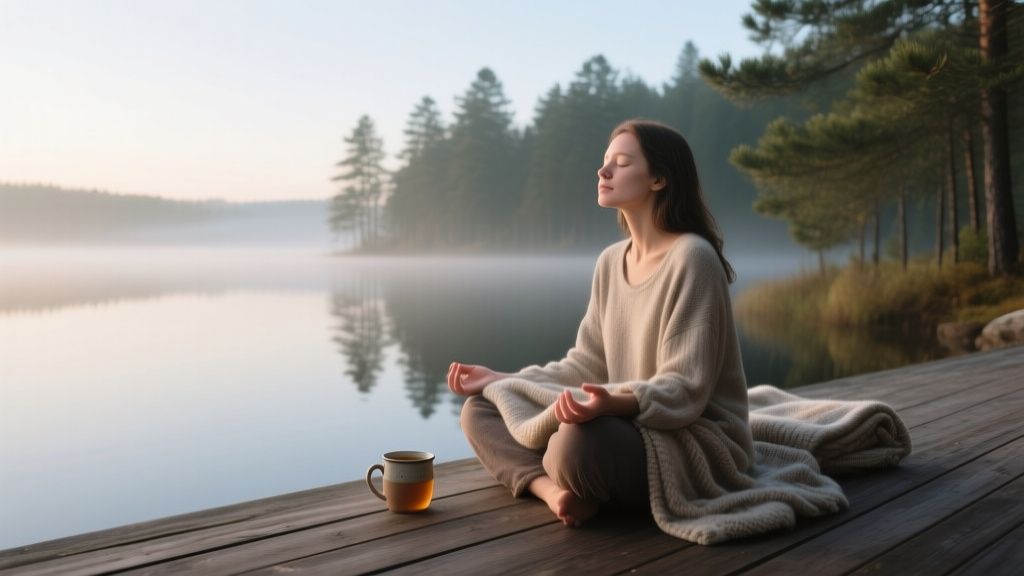
Happiness during sitting and focusing isn’t about feeling joy all the time. It’s about building a steadier, quieter mood that lasts all day long. Many people describe it as a sense of ease, not joy or thrill.
How Meditation Changes Your Brain
When you sit and focus often, your brain’s stress response slowly shifts. Your nervous system learns to calm down faster after something stressful. Research on the Effects of Meditation on Mental health found this: a four-week program helped people feel happier. It also cut down worry and sadness in those who tried it.
This doesn’t mean you’ll never feel stress again. Rather, you’ll bounce back from it more quickly and notice stress less often. For example, the goal is to create space between a hard moment and your reply to it.
Why This Practice Builds Well-Being
When you sit and focus, you train your mind to let go of looping thoughts that drain your power. For example, many of us replay past moments or imagine future problems for hours. This habit tires us out and blocks happiness.
Regular meditation helps you step back from your thoughts. Research on Relationships between Mindfulness, Purpose in life and happiness found something interesting. People who had more mindfulness felt happier and had less worry. Mindfulness (this kind of open awareness) explained half of why some people felt happier than others.
The Link to Real-Life Peace
People who sit and focus often say they feel less grumpy and more patient with others. Because their own nervous system is calmer, they respond to life’s hassles more gently. This makes their bonds better and cuts down on fights at home and work.
For example, a parent who feels stressed by bedtime routines might find help this way. Just ten minutes of meditation each morning helps them stay kind and present with their kids. This small change has big ripple effects.
How the Mind Settles Through Practice
Sitting and focusing begins with the breath. You sit in a calm place, close your eyes, and notice the air moving in and out of your nose or the rise and fall of your chest. Then when your mind wanders, you gently bring happiness and meditation practice back into focus.
At first, your mind will wander constantly. This is normal and expected. Each time you notice it has wandered and bring it back, you’re doing the practice correctly. So it’s not about never having thoughts; it’s about not getting caught in them.
The First Four Weeks
Many people start with five to ten minutes a day. After one or two weeks, you might notice you feel calmer in hard moments. Then after four weeks, the shift becomes more clear. Try listening to a 10 Minute Guided Meditation to build your routine with gentle tips.
Some people find that apps or tools have Free Meditations for Pursuit of happiness. This makes it much easier to start.
Real-World Examples
A common scene is the busy worker who feels stressed by mail and talks all day. By sitting and focusing for ten minutes before work, they create a mind buffer. Then the rush still happens, but they don’t take it home in their head.
How Specific Practices Help
Some people practice Meditations on Happiness & Joy to build good feelings. Others use a method based on breath or body noticing. What matters most is doing it over and over.
Research on Which Type of Meditation Boosts happiness most shows that different styles suit different people, but all deliver benefits when practiced regularly.
Common Mistakes to Avoid
The first slip-up is looking for fast results. Sitting and focusing is not a pill. It’s a skill that grows slowly over weeks. So some people quit after three days. They still feel stressed and don’t see that real change takes longer.
The Perfectionism Trap
New people often think they’re “doing it wrong” because their mind wanders or they don’t feel calm. Actually, a wandering mind is the whole point of this work. Each time you notice and return, you’re winning, not failing.
Practical Tips for Readers
Start small. Five to ten minutes is enough for the first month. Set a timer so you don’t watch the clock. For example, find a quiet corner at home, or sit in your car before work if that’s your only option.
Pick a time you use each day. Morning is often best because your mind is fresh and you can’t skip it later. So even three times a week is better than waiting for the perfect slot that never comes.
Building Your Routine
Tie sitting and focusing to a thing you do each day. For example, do it right after you eat breakfast or brush your teeth. Or do it before your coffee. This way it feels like a habit, not like extra work.
Keep a simple journal. Write one or two sentences each day about how you felt. So this isn’t homework; it’s a way to notice changes you might otherwise miss. After a month, you’ll see small shifts in mood or patience that proved the practice is working.
Current Trends and Challenges
More jobs and schools now offer sitting and focusing programs. This is good because it cuts out shame and makes it easy to try. But some programs focus only on stress relief. They miss the deeper parts that build real happiness.
Digital Wellness and Balance
Many people meditate using apps or videos but spend the rest of the day on screens. This mixed approach still helps somewhat.

Comparison Table
Here are four common meditation approaches and how they compare:
Each path builds happiness and calm through other doors. For example, many people use two or three paths together.
Steps to Follow
- Sit in a comfortable place and close your eyes daily.
- Notice your breath moving in and out of your nose.
- Gently bring your focus back when your mind wanders away.
- Practice for five to ten minutes at the same time.
- Keep a simple journal to track your mood and patience.
- Tie your meditation to a daily habit like breakfast.
Frequently Asked Questions About happiness and meditation
How long does it take to feel the benefits of meditation?
Some people notice a slight shift after one week of daily work. Most see clear changes within two to four weeks. So the key is doing it daily; twice a week is slower than every day.
Can you meditate too much, or is there an ideal amount?
Most people find that ten to thirty minutes each day works well. Longer sessions don’t always give better results. Some people sit for forty minutes or more. But new people do best by building the habit first without rushing into longer times.
What if your mind goes completely blank during meditation?
A fully blank mind is rare and not the goal. The normal feel is a steady stream of thoughts that you notice and gently let go. Also, if your mind does blank out briefly, that’s fine too; it’s all part of the work.
Does meditation work if you’re deeply depressed or anxious?
Sitting and focusing can help you feel better with real care. But it’s not a swap for therapy or pills when you need them. If you’re having hard times with sadness or worry, talk to your doctor or care provider first.
How is meditation different from just relaxing or daydreaming?
Rest is passive; your mind goes where it wants. Sitting and focusing is active; you train your mind and gently bring focus back when it drifts. This mental work rebuilds your brain and builds real, lasting calm.
Conclusion
Happiness and meditation aren’t two split things. They’re two parts of one habit. When you train your mind to settle and focus, peace grows by itself. When peace grows, real happiness follows.
Start today with five minutes of quiet breath. Set a time, find a spot, and simply notice your breath moving in and out. Do this daily for a month. Then you’ll begin to notice small shifts, less grump, easier sleep, a steadier mood. After that, the choice to keep going becomes clear because you’ll feel the shift yourself. That shift is real, and it’s yours to build.
Expert Insight
Research from the National Center for Biotechnology Information shows that mindfulness and regular practice are connected with both higher happiness and lower anxiety symptoms. This means happiness and meditation aren’t just feel-good ideas, they’re supported by science showing real changes in mood and resilience that last beyond the meditation session.
This guide is part of our wellness resource library. You may also find value in choosing food security in african countries helpful for understanding how daily habits support both individual health and broader well-being. For more on how meditation relates to your overall happiness, see How Meditation Relates to Happiness and explore Why It Is The Ultimate path to inner peace.



Pingback: How Does how to build a daily meditation habit Really Work?