
About This Article
This guide explains how to build a daily meditation habit by showing you the core steps, common pitfalls, and practical ways to stay consistent. Learn more below.
Introduction
Building a daily meditation habit means sitting quietly each day and focusing your mind. You use simple techniques to calm your thoughts and stay present. It works because when you tie meditation to something you already do, like brushing your teeth, it becomes automatic.
Many people want to meditate but can’t stick with it. They might sit down once or twice, feel frustrated when their mind wanders, and then stop. The gap between wanting to meditate and actually doing it daily is real, and it’s not just about willpower.
In this article, you’ll learn what a daily meditation habit really is, why it matters for how you feel, how to set it up so it lasts, and what mistakes to avoid. By the end, you’ll have a clear path forward, not just inspiration.
Table of Contents
Meditation as a Daily Routine
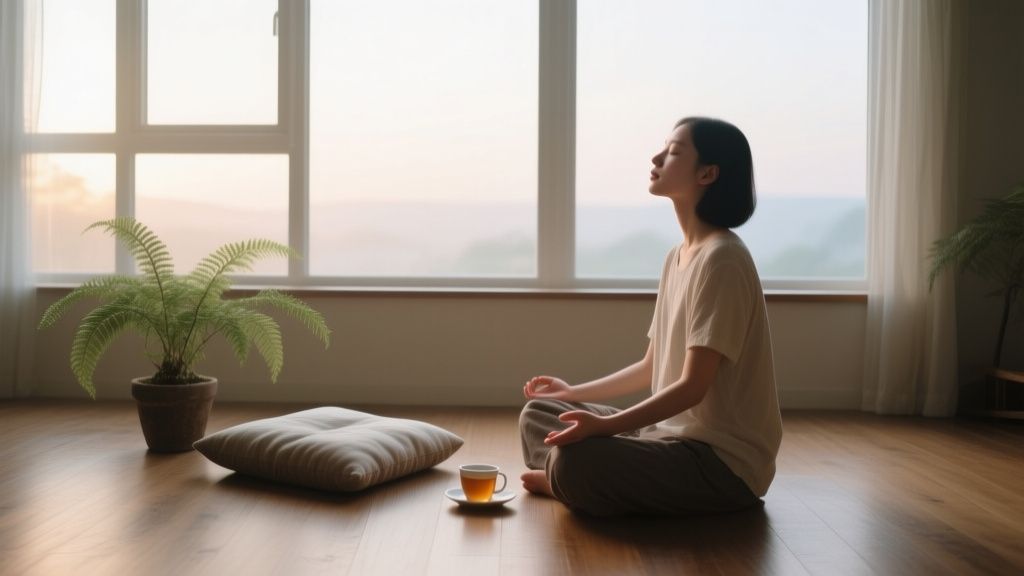
A daily meditation habit is simply sitting quietly each day and watching your mind without judging it. You pick a time, find a quiet spot, and spend a few minutes focusing on your breath or a simple phrase. The goal isn’t to have a blank mind. Instead, you notice when your thoughts wander and gently bring your attention back.

This kind of practice has roots in ancient traditions, but today it’s often taught in simple, practical ways. Modern meditation stripped of religion is just a technique for training your attention and awareness. For example, many people find it helps them feel calmer and more grounded all day long. Learning how to build a daily meditation habit gives you tools that work in busy modern life.
How Habit Formation Works
Building a habit follows a simple loop: a trigger, a behavior, and a reward. For meditation, your trigger might be finishing your morning coffee. Your behavior is sitting down to meditate. Your reward is the sense of clarity you feel afterward. When this loop repeats at the same time each day, your brain starts to expect it and the habit sticks.
The key is doing it every day more than doing it for a long time. Even five minutes every single day builds the habit faster than thirty minutes once a week. For example, your brain learns through repetition. The same time and place each day make the habit stick more easily than changing your routine.
So the foundation of how to build a daily meditation habit is matching meditation to your existing schedule so it doesn’t feel like extra work you have to remember.
Why Daily Practice Matters
A daily meditation practice can help you manage stress and feel more at ease when things get tough. When you meditate regularly, you train your mind to respond rather than react. You notice your emotions without being swept away by them. This is a skill that carries over into the rest of your life.
Beyond stress relief, consistent practice often leads to better focus and concentration. Your attention span tends to improve because you’re exercising that mental muscle every day. Many people also report sleeping better and feeling less anxious after establishing a steady habit. The benefits go far beyond the meditation cushion.
The Long-Term Effects
People who meditate daily often notice changes after a few weeks, though the shifts are subtle at first. Learning how to build a daily meditation habit helps you understand these changes. You might find yourself pausing before reacting in a tense conversation. Or you might notice your breath when you feel tight in your chest. These small moments of awareness add up over time and shape how you handle challenges.
The practice also supports what researchers call emotional regulation. That’s your ability to manage your feelings without being controlled by them. When you sit with your thoughts each day without trying to fix or change them, you learn that thoughts are temporary and don’t require action. This understanding naturally reduces anxiety about worries that might otherwise spiral.
For example, someone practicing daily might notice they no longer check their phone the moment they wake up. Or they respond to criticism with curiosity instead of defensiveness. These aren’t dramatic shifts, but they add quality to everyday life.
Setting Up Your Habit
Start by choosing a specific time that fits your schedule without requiring extra effort. Early morning, right after breakfast, or just before bed all work well. These times already exist in your routine. For example, the best time is the one you’ll actually do, not the one that sounds ideal.
Next, pick a quiet spot where you can sit comfortably for a few minutes without interruption. This doesn’t need to be fancy. A corner of your bedroom, a chair by a window, or even your car works fine. The consistency of place helps your brain recognize that this is meditation time. Making it easier to focus becomes automatic.
Starting Small and Building Up
Begin with just five minutes, even if you feel you could do more. Five minutes every day is vastly better than twenty minutes twice a week. It builds the automatic habit. After two or three weeks, you can extend to ten minutes if you want. But keep it short at first so it doesn’t feel like a burden.
Use a simple timer on your phone so you’re not watching the clock. Choose a guided audio or app if that helps you stay focused. Many people find that guided meditations make the practice feel less abstract and easier to follow, especially when starting out. Once the habit is solid, sitting in silence becomes simpler for most people.
Therefore, your setup is minimal: a time, a place, a timer, and perhaps a guide. That’s truly all you need to begin.
Real People Who Meditate Daily
Athletes use meditation to stay calm under pressure and sharpen their focus. Parents fit it in before the household wakes up. They use those quiet minutes to set a calm tone for the whole day ahead. For example, professionals in high-stress jobs often find that a morning meditation routine keeps them steady when meetings pile up or deadlines loom.
Students use how to build a daily meditation habit as a tool to ease exam anxiety and improve their focus. The practice works for many types of people because it’s flexible and needs no special equipment.
Everyday Success Stories
One common path is someone noticing they feel irritable or scattered. They decide to try meditation for a few weeks and then realize they don’t want to stop. They feel noticeably calmer and more patient, so they keep going. After a few months, it becomes automatic. They’d feel off-balance without their daily sit because the practice has reshaped their baseline.
Another common story is someone noticing they’re struggling with sleep. They try meditation at bedtime and sleep better almost immediately. The practice of sitting quietly and focusing on breath naturally settles a racing mind. This makes sleep easier to find. Many people stick with it simply because they sleep better, even if they didn’t start for that reason.
What’s consistent across these examples is that people who succeed don’t rely on motivation. They anchor the habit to something that already happens, like morning coffee or the kids leaving for school. When meditation becomes part of that established routine, it no longer depends on remembering or feeling like doing it. Learning how to build a daily meditation habit is really about making it automatic.
Common Mistakes to Avoid
Starting with too long a session is a frequent mistake. People think more is better, so they sit for thirty minutes. Their mind races the whole time, they feel frustrated, and they quit. Five minutes of genuine practice is far more effective than thirty minutes of fighting distraction. Your brain learns from consistency, not duration.
Another common pitfall is expecting your mind to go quiet or blank. Meditation isn’t about stopping thoughts. It’s about noticing them without judgment. When you think “I’m bad at meditation because my mind won’t stop,” you’ve missed the point. You’ll likely abandon the practice. Shifting this belief changes everything.
Placing Meditation in the Wrong Spot
Trying to fit meditation in whenever you remember, with no set time, almost always fails. Your brain doesn’t create a habit without repetition. Without a trigger time, you’ll forget or deprioritize it. The mistake is treating meditation as optional rather than anchoring it to something that already happens daily. Understanding how to build a daily meditation habit means making it automatic, not optional.
So the most important thing is consistency and a realistic time commitment. Five minutes at the same time every single day beats sporadic longer sessions every time. When choosing happiness and meditation the smart way, you’re prioritizing small, sustainable progress over heroic efforts that burn out. Your steady five minutes matter far more than occasional longer sessions.
Practical Tips for Readers
Set a specific alarm or reminder on your phone tied to an existing daily event. This takes the guesswork out of “when should I meditate?” and removes friction. You simply follow the cue like you would any other daily task.
Use a meditation app or free online video if focusing on your own feels hard at first. Learning how to build a daily meditation habit often starts with guided meditations. They give your mind something to follow and reduce the frustration of not knowing what to do. Once the habit is strong, trying silent meditation becomes much easier.
Tracking and Adjusting
Mark off each day you meditate on a calendar or in an app to see your streak grow. This visual reinforcement satisfies the brain’s reward center and motivates you to keep the chain going. After a few weeks, you won’t want to break the streak. The habit becomes self-sustaining.
If you miss a day or two, simply restart without guilt or judgment. That’s precisely the attitude meditation teaches. Practice it off the cushion too. The goal is lifelong consistency, not perfection. One missed day is nothing compared to weeks of daily practice.
Current Trends and Challenges
Stress from work and technology is rising, so more people are trying meditation than ever before. Apps and online resources make it easier to start. The flood of options can feel overwhelming though. Many people begin but don’t stick with it because they’re not anchored to a clear routine. Understanding how to build a daily meditation habit solves this problem.
One trend is workplace meditation programs, where employers offer guided sessions or quiet space during the workday. This reduces barriers and normalizes practice. Sometimes it creates pressure to meditate in a certain way though. Some people thrive with structure and community, while others prefer solitude.
Staying Genuine in the Digital Age
Social media and apps sometimes make meditation feel like a performance or a status symbol. When you post about meditating or compete with a streak, the practice can shift from inner calm to outer image. The challenge is remembering that the real value is private and personal, not public.
What’s changing is the accessibility. Anyone can now learn to meditate without expensive classes or retreats. At the same time, the ease of access has created unrealistic expectations. People sometimes expect instant results or think a perfect meditation should feel blissful. They don’t know that most sessions are quiet and ordinary. When this doesn’t match their fantasy, they stop. Learning how to build a daily meditation habit means you understand that simplicity and ordinariness are the whole point.

Comparison Table
Different approaches to building a habit each have strengths and limits. For example, here’s how common methods compare:
Each method works best when matched to your personality and lifestyle. However, the key is picking one and sticking with it long enough for the habit to form.
Frequently Asked Questions About how to build a daily meditation habit
What happens when you meditate every day for weeks?
Most people notice clearer thinking, less reactive emotions, and better sleep after a few weeks of daily practice. The changes are gradual rather than sudden, but they add up fast. You’ll likely feel calmer in stressful moments and more able to pause before reacting. For example, these shifts happen because your brain is rewiring through repetition.
How long does it take before meditation feels natural?
For most people, a habit solidifies after about three to four weeks of daily repetition. The timeline varies though. Some take longer, especially if the timing or location isn’t quite right. The key is consistency rather than a magical number of days.
Can you meditate too much, or is daily practice always better?
Daily practice is generally beneficial, but more time isn’t always better if it makes the habit unsustainable. Some people meditate for ten minutes. Others do thirty. Find a duration you can keep forever, even on busy days, rather than aiming for a perfect session.
What if your mind races during meditation, is that failure?
No, a busy mind is completely normal and not a sign you’re doing it wrong. The practice is noticing when your mind wanders and gently returning your focus. It’s not achieving a blank mind. That noticing is the whole point. A “busy” session is actually successful meditation.
Should you meditate at the same time every day?
Yes, consistency of time and place dramatically strengthens the habit. Your brain learns to expect it. When meditation is tied to an existing routine, it requires no willpower or remembering. For example, morning is popular because it sets a calm tone. But evening or midday work just as well if that fits your life.
Conclusion
How to build a daily meditation habit boils down to picking a small time and place. Anchor it to something you already do. Show up every day without expecting perfection. The practice itself is simple: sit, focus on your breath, notice when your mind wanders, and gently return. Over weeks, this quiet routine transforms how you handle stress, think, and relate to your emotions.
Your next step is to choose a time tomorrow and commit to five minutes. Set a phone alarm, find a quiet spot, and sit down with no agenda beyond watching your breath. After two weeks, check in with yourself about how you feel. This is your chance to discover that meditation isn’t mystical or difficult. It’s just the act of paying attention, repeated daily. Starting tomorrow makes all the difference.
Expert Insight
Health organizations widely recommend daily meditation as a practical tool for managing stress and improving focus. The habit works best when treated as a fixed appointment rather than a flexible goal, so your brain learns to expect it and the practice becomes automatic like brushing your teeth.
For more on making mindfulness part of your life, see our guide on choosing happiness and meditation the smart way, which explores how daily practice shapes your choices and outlook over time.
Like any skill, meditation improves with practice, and the practice itself follows patterns. As systems theorist explains in works on how buildings learn, repetition and feedback create lasting change. The same principle applies to your mind and habit formation. Each day you sit reinforces the neural pathways that make focus and calm easier. This gradually reshapes your default state from reactive to responsive.



Pingback: How To Start A Morning Routine That Sticks?