
Academic Research Journal • Wellness
Original Research Article • 2026
Keywords: box breathing technique for anxiety
Abstract
The box breathing technique for anxiety is a simple four-part breathing method that reduces stress and worry in acute moments. Research shows it lowers heart rate, cuts anxiety quickly, and works best for people with high baseline anxiety levels. This technique offers a practical tool you can use anywhere, anytime. Full findings reviewed below.
About This Article
The box breathing technique for anxiety is a simple four-part breathing method that reduces stress and worry in acute moments. Research shows it lowers…
Published: · 13 min read
Introduction
When stress hits, your body tenses up. Your mind races. Anxiety is a feeling of fear and unease. It can make you sweat, feel restless, and have a fast heart rate.
Contents:
When stress hits hard, your body pulls tight and your heart races fast. However, you have a tool within reach right now. Learning to slow your breath down gives your nervous system a signal to calm. This shift can ease tension in minutes, not hours.
- Introduction
- Theoretical Framework
- Scientific Mechanisms
- Applications
- Key Insights
- Comparative Data
- Challenges and Future Directions
- FAQ
- Apply Knowledge Today
Theoretical Framework
Core Definitions
Anxiety is unease and dread that happens when you face a threat or stress. It’s not a flaw or weakness. It’s your body’s alert system trying to keep you safe.

Box breathing is also called square breathing. It’s a timed breath pattern. You spend equal time on each of four steps: inhale, hold, exhale, and hold again.
The technique uses four equal steps: breathe in, hold, breathe out, hold. For example, you might count to four on each phase, making a complete cycle last sixteen seconds. Because each part gets the same time, your mind has a clear pattern to follow and trust.
Historical Development
Breathing work runs deep in many world cultures and old ways of healing. Modern science has only just tested whether this old way works for today’s anxiety and stress. Now scientists have solid proof that it does. For more on this, see Reduce stress with structured.
Scientists began formal studies on this technique in recent years. The findings so far are very strong.
Recent findings show this method cuts heart rate and stress signs in the body. So far, research points to real gains when done during tense times or threats. The proof shows it may help people who carry high worry levels even more than others.
Scientific Mechanisms
Primary Mechanism
The box breathing technique for anxiety involves slowing your breathing pace. This shift helps you feel more at ease.
Equal timing on each phase is key to the effect. The structure helps you focus your mind. It breaks the cycle of rapid, shallow breathing that happens during anxiety. This focus keeps your thoughts from racing.
Yet the fixed four-part pattern also calms your nerve system in a body way. Because each phase lasts the same length, your body learns to shift from alert to at ease. This steady rhythm tells your brain that the threat has gone.
The rhythm acts as a focus point when worry pulls you away. Also, the equal timing teaches your nervous system to stay steady. This balance of work and ease is what makes the technique work for acute stress.
Research Findings
A big 2024 study found great results. Box breathing and long breaths out cut stress signs in the body. This came after people faced a hard test. The practice slowed heart rate. It cut anxiety. It cut stress signs in spit. These gains showed up within minutes. See stress in the body after people.
Another 2024 research project tested this method in everyday life situations. Simply breathing anxiety away showed that box breathing brought greater reductions in state anxiety than other methods. The strongest effect showed up in people who already had high trait anxiety levels.
Applications
Real-World Applications
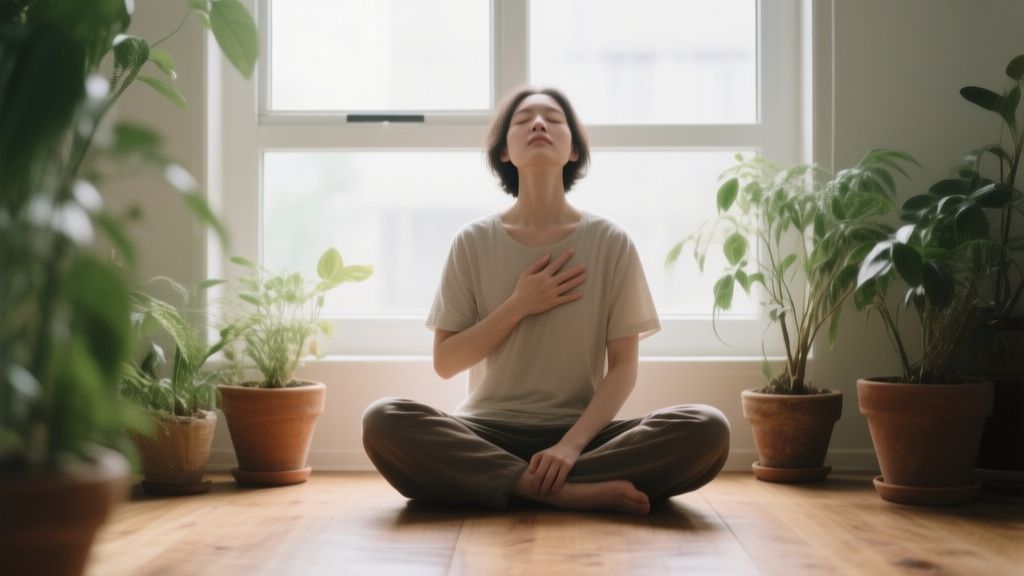
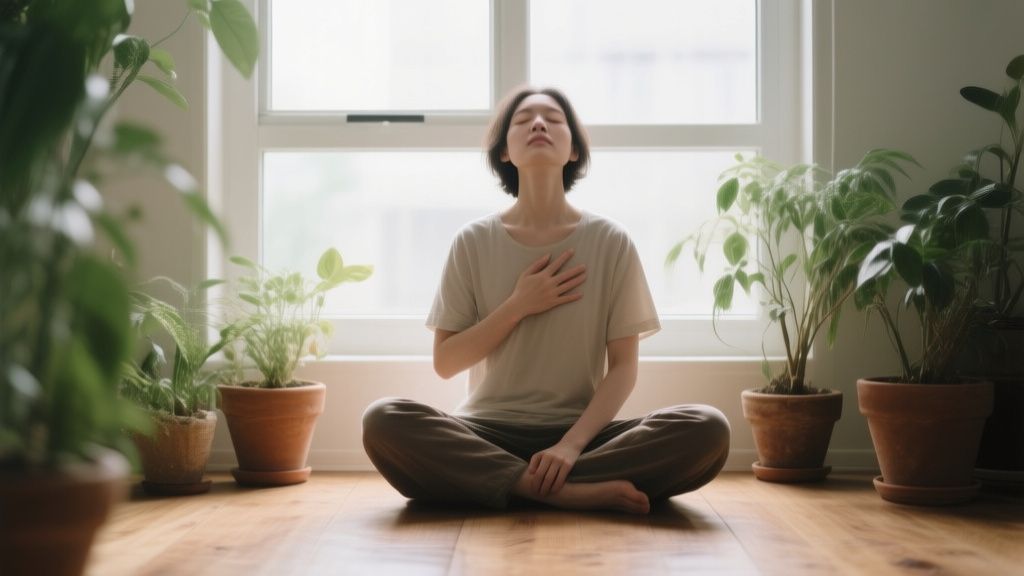
You can use this technique before a job interview, during a tense meeting, or when panic starts to rise. Take three minutes in a quiet spot or even at your desk. Then do the breathing pattern three to five times.
Many people use it when they notice early worry signs. These signs include a tight chest, fast thoughts, or restless feelings. Using it early, before anxiety builds, often works better. It works better than waiting until stress is severe.
Many people find it helpful to work at it once daily when calm. The pattern then feels known. When strain comes, your body already knows what to do. Because you’ve done the steps, you won’t have to think hard about counting or timing.
Key Insights
Expert Perspectives
Research shows this works best as part of your daily stress tools. It’s not a one-time fix. The steady finding is that short, daily work trains your body to act fast. When you need it, your body knows what to do. A linked source on this is How breathing differently can improve.
The real value comes from practice before you need it most. When you’re already in full panic, your mind may resist new techniques. However, learning it on calm days pays off when stress hits hard.
Practical Takeaways
Start by doing the box breathing technique for anxiety when you’re calm and at ease. This builds your skill and muscle memory. Then your body knows the pattern when stress hits.
Use it at the first sign of worry, not when you’re in full crisis mode. For example, if you notice your heart racing during a work call, take two minutes to do three rounds before you speak again. This pause, then, helps you feel more in control.

Comparative Data
The table below outlines the key findings from recent trials. It also shows gaps in what we still need to learn. The main picture is clear and positive.
The data shows clear gains in short-term stress times. Most research so far has tested this in lab settings with set stress. Real-life times are messy and complex. But real-world trials are now starting to close this gap.
What stands out is that this technique works fast and costs nothing. The main gap is knowing whether daily work over months makes it stronger. For example, we don’t yet know if each time starts fresh or builds on the last one.
Challenges and Future Directions
Current Limitations
Not all people find this method equally good on the first try. Some people struggle to focus on breathing when anxiety is high. Others need a few practice times before they feel a real shift. However, most people do notice a change with time.
Some folk find the fixed rhythm feels stiff or hard to follow at first. But most adapt within a few tries and find it gets easier over time. If the basic four-count feels wrong for you, try longer or short counts until it fits.
Most studies have been short and small. We don’t yet know if gains last over months or years. We also don’t know how well the box breathing technique for anxiety works for severe anxiety illness that needs doctor care. But early signs look good.
Future Directions
Future studies will likely test this technique with other treatments. Researchers want to see if mixing methods works better. They’ll also study whether daily use over weeks builds more steady, long-term calm. For example, they may compare doing it each day to doing it once in a while. How To Overcome Stress is a good partner to this section.
Scientists want to know if using this with other stress tools works better than either one alone. Also, they’re curious if brief daily work keeps gains strong for weeks or months. Future work will show which groups gain the most from this simple technique.
Scientists are interested in finding out which people benefit most and least from this approach. They’ll also explore whether different breathing ratios or timing work better. Different types of stress may need slight changes to the basic method.
Frequently Asked Questions
How do I do box breathing step by step?
Sit in a calm spot and breathe in through your nose for a count of four. Hold your breath for four counts, then exhale through your mouth for four counts. Hold empty for four counts, then repeat the cycle three to five times.
Can breathing exercises help with panic attacks?
Slow, structured breathing can help reduce the sharp symptoms of panic. However, start practicing when you’re calm so your body learns the pattern before panic strikes. Anxiety can make it hard to focus on new techniques.
Can anxiety cause shallow breathing?
Yes. When you feel anxious or under threat, your breathing may become fast and shallow. Research supports slowing your breathing to help reduce anxiety symptoms.
Can deep breathing help with anxiety?
This calming effect, also, can happen in just a few minutes.
Why should I do box breathing instead of just breathing slowly?
The equal four-part shape gives your mind a clear point and beat to follow. This shape works better than just “breathing slow.” It keeps your focus and stops your mind from racing back to worries. Your focus stays firm.
Apply Knowledge Today
For example, benefits appear strongest for people prone to high stress.
This tool fits into your daily life at no cost and no side effects.
Start today by doing the four-step pattern when you’re at ease. Take one full minute in a quiet moment. Then do three rounds to build the skill before you need it in a crisis.
Expert Insight
Research emphasizes that the box breathing technique for anxiety works best when you practice it on calm days first. This prepares your body to use it instantly when real stress hits, rather than trying to learn it during a moment of panic.
References
MedlinePlus (U.S. National Library of Medicine). Anxiety. medlineplus.gov/anxiety.html
NIH/PMC. Box breathing and prolonged exhalation reduces markers of physiological stress reactivity in response to a virtual trier social stress test. pmc.ncbi.nlm.nih.gov/articles/PMC13321280/
PubMed. Simply breathing anxiety away? A pilot, just-in-time ecological momentary intervention study of one-minute cyclic sighing versus box breathi. pubmed.ncbi.nlm.nih.gov/42002307/



Pingback: How To Start A Morning Routine That Sticks?
Pingback: The Best Food Preservatives and Canned Food Guide